Misinformation is everywhere online, from viral conspiracy theories to misleading political content, to the point where you could see something and have NO clue it is completely made up. It spreads rapidly, influences the public opinion on certain matters, and can even cause real-world harm to people or businesses. As two of the biggest platforms on social media, Instagram and Twitter (now called X, but I refuse, and it will always be Twitter to me) have taken different approaches to dealing with all the false information on their platforms in order to potentially halt the misinformation spread. I am going to break down what each social media platform is currently doing to fight the misinformation, where they may be falling short, and what I think could possibly make their strategies even better.
Instagram, owned by Meta, is all about visual content and creating the perfect aesthetic throughout your feed, so I think it’s really easy for misinformation and potentially edited pictures to blend in. Posts that look aesthetic or share “facts” on a cute infographic might go viral fast, even if they’re totally fake. In 2025, Instagram is still trying to stay on top of this, using fact-checking tools, labels, and new warnings for AI-generated content.
One big thing Instagram uses is third-party fact-checking with their new partnership with legit organizations like Reuters and the Associated Press. If a post gets flagged, it’s reviewed, and if it’s false, Instagram either puts a warning label on it or takes it down completely. These warning labels explain why the post is misleading and usually link to trusted sources where you can find true information regarding the topic. Also, flagged posts don’t get pushed out by the algorithm as much, so fewer people end up seeing them.
Instagram also pushes resource hubs during big events like elections or public health crises. These show up when you search for certain topics or sometimes even at the top of your feed. I remember this happening a lot during COVID and the 2024 election; they’d direct people to accurate info from real sources.
One of the newer updates from 2024 is that Instagram now labels AI-generated content. With how good deepfakes and AI images are getting, this is actually super important. So if a post was made using AI, Instagram will try to include a note letting you know. It doesn’t necessarily say the content is false, but it gives you a heads-up that what you’re seeing might not be real.
Here is what the AI label would look like on photos.
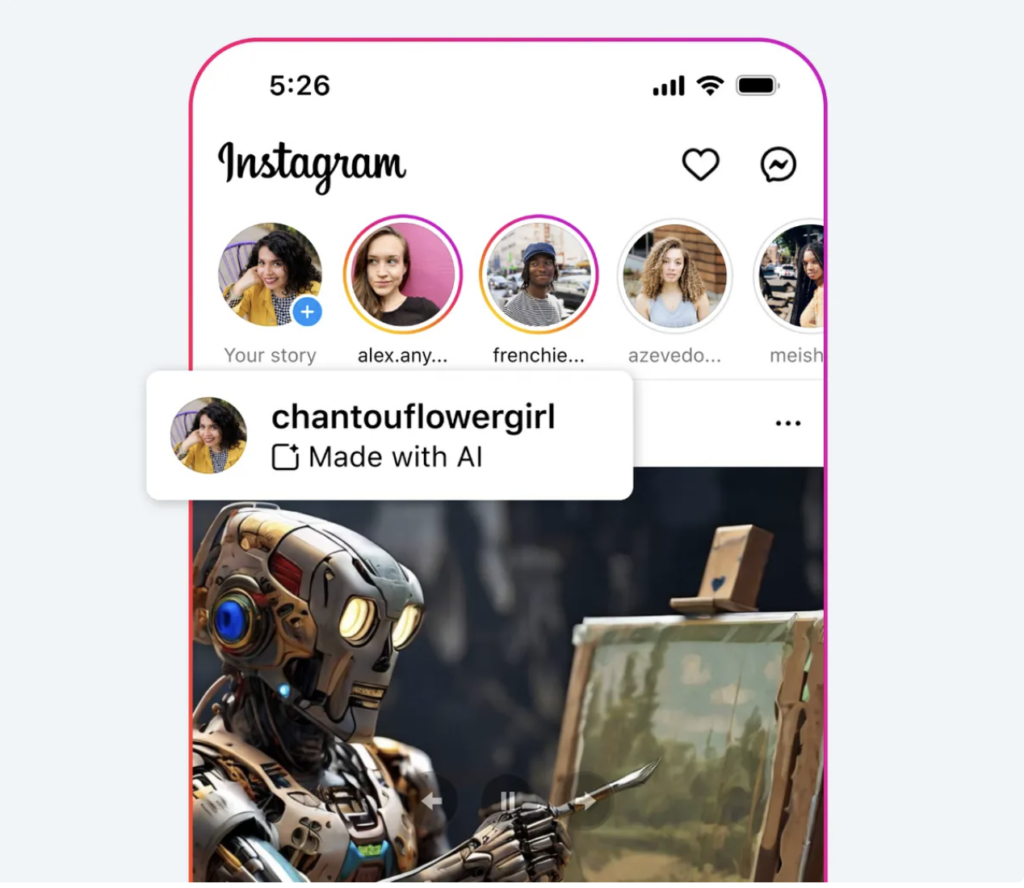
From what I’ve seen, sometimes these labels seem random, like I’ve noticed them on normal photos of my friends that definitely weren’t AI, so clearly the system isn’t perfect yet. Also, I almost never see these labels used on any Reels. Probably because Reels are short, go viral quickly, and might be a little bit harder for Instagram to monitor or notify us of AI use without stopping the entire video we are watching. Not to mention, DMs are a huge weak spot where misinformation spreads with no moderation at all, but there still needs to be that sense of privacy from the app seeing everything you do.
If Instagram really wants to improve, they need to speed up the review process of things they suspect as misinformation. Misinformation spreads way too fast to wait days for fact-checking when they are clearly already mislabeling things as AI. I think they also need to moderate stories and DMs better, while still allowing privacy. New accounts are constantly being made and posting these hints of misinformation, so a better way of tracking that may increasingly help. And honestly, a little more user education wouldn’t hurt, like short Reels or tips showing people how to tell what’s real and what’s fake, especially with all this AI stuff. I guess it does depends what your algorithm is like, because I just see silly videos, but there could be humans out there who are only taking in misinformation being spread through Instagram.
Twitter (aka “X”)
Ever since Elon Musk bought Twitter in 2022, the platform has changed a LOT and how it deals with misinformation is one of the biggest shifts. Before, Twitter worked closely with fact-checkers and had stricter rules. Now, most of that’s been dropped in favor of something called Community Notes.
Community Notes let users add context to posts. So if someone tweets something misleading, verified contributors can write a note under it that explains what’s wrong. These notes include links, sources, and facts. But here’s the catch: the note only shows up after people from different backgrounds vote it as helpful. So if it is constantly voted as not helpful, it will not be shown to others.
Here is an example of a community note.
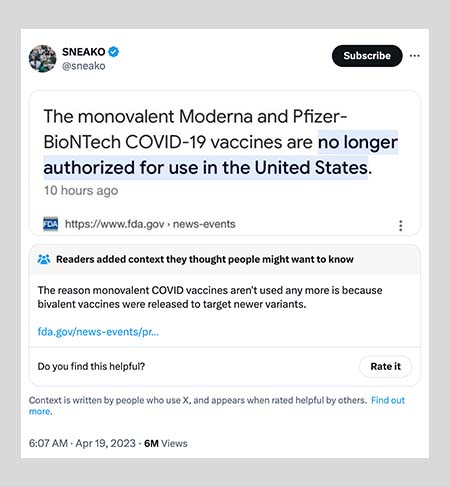
In theory, it’s a really cool idea. It lets the community help fact-check in a more open way. I’ve seen it work well, like when a viral tweet falsely said mail-in voting was canceled in some states, and a Community Note popped up within hours with links to the actual info. That is super helpful and shows how beneficial this new system can be when used correctly. But the system definitely has flaws. If a post isn’t getting enough attention, it might not get fact-checked at all. And even when it does, the community is not written by the COMMUNITY, so it also could be more misinformation. Twitter cut ties with its professional fact-checkers, and there’s not as much expert oversight anymore, which is kind of scary.
From what I’ve seen using Twitter daily, Community Notes can be really useful. They’re not always fast, and the bigger or more political the account, the slower the response seems to be. I have seen a few community notes that also seem to just be kicking the creator and almost an attack on their original tweet, which I admit can be funny and has made me laugh.
To fix this, Twitter should speed up how notes appear, especially on tweets with high engagement that are being seen by hundreds of millions of people. Even a temporary warning until the note is approved would help stop false info from spreading too far. And honestly, bringing back some professional fact-checkers wouldn’t hurt. For example, during election season, maybe have these professional fact-checkers do their thing so people’s views aren’t swayed by wrong information. The community system is cool, but it needs backup for complicated topics that the average person might not know the exact answer to.
Instagram and Twitter both handle misinformation in totally different ways. Instagram uses a more professional, structured system with fact-checkers and labels meant to warn its viewers. Twitter is a little more open-source, letting the community step in and take charge. Instagram feels more trustworthy, but it struggles to keep up with fast content like Reels and DMs, and constantly mislabels. Twitter is more democratic, but it can be inconsistent and too slow to react. As AI makes fake content look even more real, these platforms need to step it up. Speed, transparency, and education are key. It’s not just about taking fake stuff down, but it’s about helping us all understand what we’re seeing and make smarter choices online.
Leave a Reply