Free expression today is shaped by a mix of private platforms, governments, civil society groups, and the news industry. Each sector can help protect speech, but each also creates its own problems as they all do it very differently. Looking at them all together makes it clearer what’s working, what isn’t, and what needs to change.
1. Private Internet Companies
Social media platforms have basically become the main place where people express themselves. The good part is that they give everyone a voice, and they can act quickly when real harm is happening. But they also make inconsistent decisions, and their rules can feel confusing or unfair. In “How to Regulate (and Not Regulate) Social Media”, the author explains how platforms act like major gatekeepers but don’t have clear standards or accountability.
Cases reviewed by the Facebook Oversight Board, like “Case No. 2021-001-FB-FBR,” show how hard it is for platforms to perfectly balance political speech, safety, and fairness. And the Board’s “Policy Advisory on Sharing of Private Residential Information” shows how tricky it is to handle doxxing without shutting down legitimate conversations that need to be had.
What they should do: Be clearer about their rules, apply them evenly, and make sure users understand why all of these different decisions are made.
What they need to watch out for: Letting different algorithms over-police speech, giving in to political pressure, and removing important information by mistake.
2. Government and Policymakers
Governments are supposed to protect free speech, but they can also threaten it with laws that go too far. Daphne Keller’s “If Lawmakers Don’t Like Platforms’ Speech Rules…” points out that policymakers don’t have easy or clean solutions, and many of their ideas end up creating more problems.
What government should do: Make narrower and much clearer laws that protect speech instead of restricting it.
They should avoid: Broad bans, criminalizing everyday actions, and using “safety” as an excuse for censorship.
3. Civil Society and Third-Party Researchers
Civil society groups help fact-check everyone, platforms and governments included. They push for true transparency and make sure free speech concerns stay visible and known in the public. Scholars like Jacob Mchangama, in “The War on Free Speech: Censorship’s Global Rise,” explain how free expression is under pressure worldwide from both governments and platforms and deserves to be constantly spoken about.
What they should do: Keep researching, auditing, and calling out abuses of power.
What they need to watch out for: Limited access to platform data and becoming too tied to political interests.
What media should do: Stay accurate, independent, and focused on informing the public on what they need to know.
They should avoid: Losing trust or cutting corners because of financial pressure or pressure from any higher up and big companies.
All four sectors need to work toward transparency, fairness, and accountability for all of their users. Free expression can only be protected if each one recognizes its own blind spots and works to fix them and make it a safer place for free speech and expression.
The internet has COMPLETELY reshaped what freedom of expression looks like, and it continues to develop and grow into something we have never seen before. Before everything moved online, courts were already dealing with different rules for previous types of media. A good example is the case FCC v. Pacifica, where the Supreme Court allowed the government to restrict certain broadcast content because radio reached people in their homes without warning, and the topics of conversations sometimes weren’t wanted by families. But once the internet came along and everything went mobile, everything changed. Suddenly, we were dealing with a global platform that anyone could use and no one really controlled, so the lines of freedom of expression were blurred, and there was a need for new rules and new control. The idea that each medium presents different First Amendment challenges became even more true when digital platforms became the main and almost only way we communicate and share our opinions with the world.
One of the biggest turning points in protecting online expression came with Section 230 of the Communications Decency Act. Those “twenty-six words” basically created the modern internet by allowing platforms to host user content without being legally responsible for everything their users say as we have seen some crazy things posted on the internet. Without this, platforms like Instagram or TikTok probably would not exist in the way we know them because they would be too afraid of lawsuits with the craziness that people have the nerve to post. But at the same time, Section 230 made people rethink where the line is between free expression and harmful content, especially when misinformation and harassment spread so easily online and have become such a major issue we face on the daily.
International ideas about expression add another layer to this conversation. Documents like the Universal Declaration of Human Rights and the International Covenant on Civil and Political Rights recognize that free expression IS a universal right, but also allows more room for limitations compared to that of the First Amendment. These documents acknowledge that protecting people from possible harm can sometimes outweigh total freedom people want sometimes. This becomes really important when we start thinking about this new digital age because online speech can reach HUGE audiences almost instantly and can affect people’s real lives in ways that those lawmakers decades ago quite literally would have never imagined.
With all of these different changes, it feels necessary to think about whether certain values should be ranked in today’s digital environment. I do not think it has to be a really rigid list, but I do think some principles should guide how we handle digital speech and controlling it. First, freedom of expression still very mch matters because it allows people to participate in society, challenge power, and share their experiences without feeling like they are fully under the control of someone else. That being said, expression cannot exist without considering privacy, especially when so much of our data is collected without us ever even noticing. Privacy needs to be high on the list because it protects people from surveillance, manipulation, and that feeling that they have no control over their online identity and personal information.
Another value that belongs near the top is the impact of speech on others. Online harassment, targeted misinformation, and coordinated attacks can silence people just as effectively as laws or censorship could. If hateful speech on a platform drives users away or harms certain groups, then the environment is not truly free and becomes very toxic. Access also really matters because the internet cannot serve as a space for our expression if large groups of people cannot even get online, which is why alot of scholars argue the internet should be considered a human right and I honestly could not agree more. It has become such a huge aspect of our lives and how we go throughout our regular days, so why would it not become intertwined with our rights.
The internet has opened up so many different opportunities for expression that people in the past could only dream of, but it also forced us to rethink how certain rights interact and which ones deserve more protection in a bunch of certain situations. In the end, a balance between expression, privacy, impact, and access is the most realistic way to protect both individuals and the digital public sphere we all depend on while allowing us to grow with the rapidly growing media.
The First Amendment is one of the strongest tools journalists have but even that constitutional protection has limits. It’s meant to allow reporters to do their jobs freely, especially when they’re job is to be sharing information the public NEEDS to know. The First Amendment says Congress can’t make laws “abridging the freedom of speech, or of the press,” which has fully built the foundation for how the media works today in the United States of America. In our democracy, we need journalists to be able to question power and tell the truth about what is happening in our world, even when it may make some people uncomfortable. That’s exactly when the First Amendment should absolutely be a shield and protect the press in any way it can.
The First Amendment should protect journalists when they’re doing their jobs the right way as they are checking facts, reporting truthfully, and covering stories that matter for us as citizens. A perfect example is New York Times v. Sullivan, which created the “actual malice” rule. This rule means that public figures can only win a defamation case if they are able to prove that the journalist knew from the beginning that something was false or that they fully ignored the truth. This specific case gave reporters the wiggle room to make honest mistakes without having to live in fear of constant lawsuits from each and every story they speak about, which is VERY essential for a free press.
But I do think the First Amendment shouldn’t be a shield for EVERYONE. If a reporter publishes something they know is false or they do not even try to confirm basic facts, that protection shouldn’t apply because they are blatantly doing wrong. Freedom of the press isn’t meant to cover carelessness or personal attacks, but truly honest mistakes that may happen in this crazy world we live in. In Branzburg v. Hayes, the Court ruled that journalists do NOT automatically get to avoid testifying in front of a grand jury if they were to be met with some type of lawsuit.
What’s most concerning now is how defamation lawsuits are being used in attempt to silence the press and stop the actual truth from coming out. Very powerful people and very powerful corporations sometimes file them pureply with the intention to intimidate these journalists into backing off, even when the reporting is very much true. These are called SLAPP suits (Strategic Lawsuits Against Public Participation). This article from Medium explains how these lawsuits are often less about justice and more about draining money and time and getting these reporters to eventually give up on the piece they are covering. Even if a reporter did literally nothing wrong, the cost of defending themselves can be devastating and ruin their entire career.
But not every single defamation lawsuit is bad. If someone publishes something false that TRULY damages your reputation, you should be able to defend yourself against that. That’s why the law tries to balance both sides of these possible issues. A plaintiff must be able to prove that the story was false, caused harm, and that the journalist acted negligently or with actual malice and depending on whether or not they’re a public figure.
This is where anti-SLAPP statutes come in and they make a HUGE difference in these situations. These laws allows journalists to ask a judge to throw out weak or harassing lawsuits before they drag on and potentially ruin their reputation or careers. In California, the California Anti-SLAPP Project explains how the defendants can file a special motion to strike, which would then put the burden on to the person who is suing as they have to prove if they have a real case. If they can not prove a case, the case gets dismissed and sometimes the journalist’s legal fees will even be covered. This is a really a big deal for smaller outlets or independent reporters who don’t have money to fight back, and maybe be the target of some powerful orginization.
Truthfully, I think the First Amendment SHOULD protect journalists who are simply doing their jobs as they tell the truth of the world, ask the hard questions we all want to know the answers to, and keep those people with power in check. But if someone uses their seat in journalism to spread lies or potentially act completely reckless, there should be consequences to follow. Weaponized defamation suits are a VERY REAL threat to democracy, but these anti-SLAPP laws do show that we can still protect real journalism while keeping things fair for everyone involved.
Free expression (the ability to speak, write, post, protest, or just share your thoughts) matters A LOT, both for society and for all of us personally. On a much bigger scale, free expression is basically the backbone of democracy and public conversation. It lets people hear many different perspectives, challenge those who are in power, and participate in the shaping of their communities. As the Stanford Encyclopedia of Philosophy explains, free speech is important not just for the speakers but also for the listeners. We need BOTH sides to participate fully to really make it work. Without the cooperation of both parties involved, society loses a key way to hold itself accountable and continue to improve.
But free expression isn’t just about society. Being able to fully express your ideas, your feelings, or your beliefs is SO IMPORTANT when it comes to figuring out who you are and what you want your identity to be. Writing, talking, or even posting online isn’t just simple communication but rather thinking out loud, testing your ideas against others, and shaping your own identity. It’s how we stake a claim in the world, create a face for ourselves, and feel like our thoughts matter in this big world. This is why free expression isn’t just public or private. It’s both. And it is everything for both sides. Society benefits heavily when people can speak freely, and people thrive when society lets them.
It also plays a really huge role in identity. On a deep and really personal level, expressing yourself helps you figure out who you are and how you relate and are seen by those around you. On a public level, it gives communities, artists, activists, and groups a voice so they can be seen and heard amongst the others. T.M. Bejan talks about the idea of equal speech, which is basically about making sure everyone’s voice gets a fair shot, not just the loudest or most powerful. When people can’t express themselves, identity gets suppressed, ideas stagnate, and communities lose the chance to connect and grow. Free expression links personal growth with public participation in a way that strengthens both.
So yes, free expression is very much worth protecting in every single way I can think of. I think it keeps democracy alive, helps people grow as human beings, and very heavily encourages social progress as this weird world continues on. I think some limits make seem as threats, defamation, or incitement, but in general, the default should always lean toward openness and allowing things to be said and done without worries. From my own experience, when people feel free to speak and share ideas, conversations are richer, people connect better, and society works more smoothly even if there is debate or different views are present. When expression gets shut down, it creates fear, tension, and silence and a world where everyone is fighting for something they are unsure of. Free expression isn’t just a rule or a right for us a human but it’s the tool that lets both individuals and communities thrive and grow, and that’s exactly why it deserves protection.
Have you ever liked one random video on your social media feed, and then suddenly your ENTIRE scroll is filled with the same kind of content? Because that literally happened to me this week, and it honestly blew my mind how quickly the algorithm caught on and changed what it was showing me.
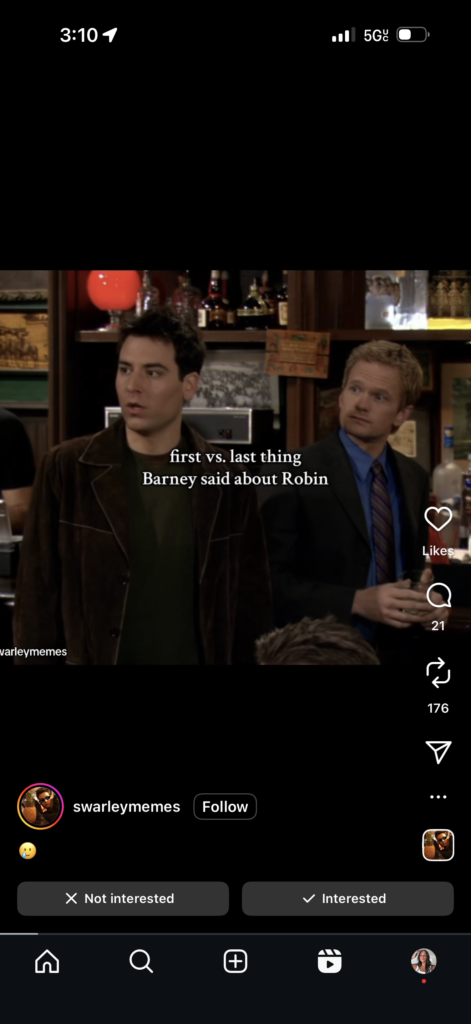
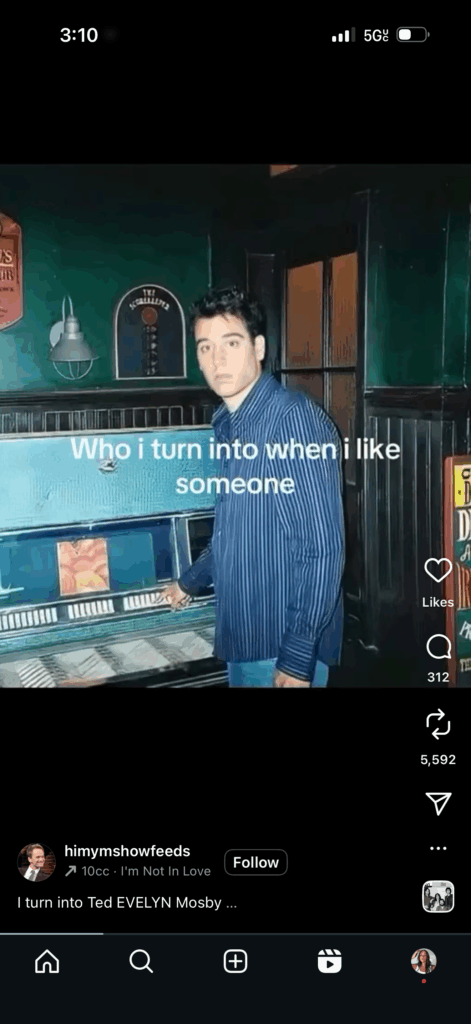
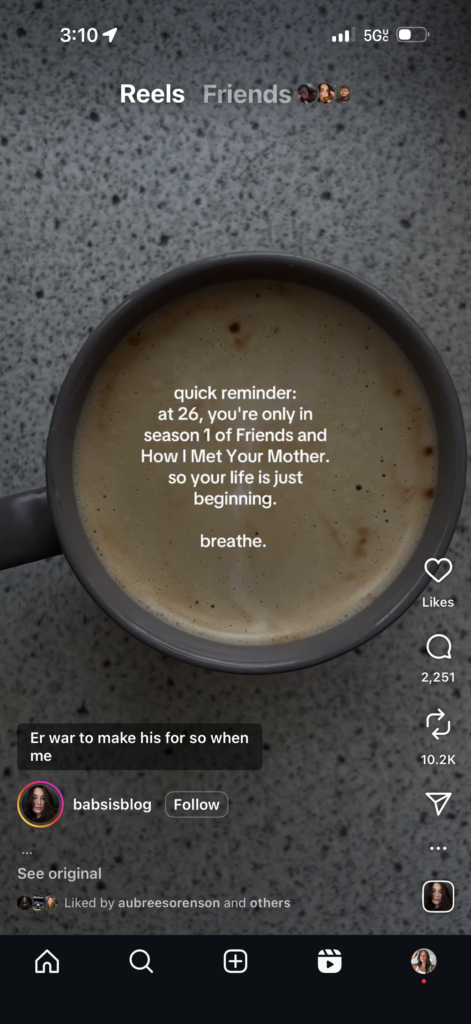
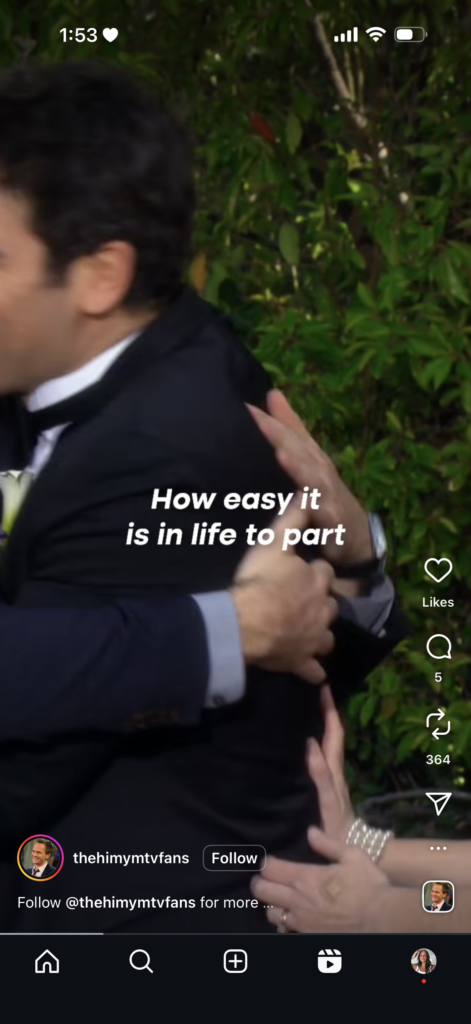
I was scrolling through Instagram reels one night, just watching random stuff like funny clips, random outfit videos, and the occasional cooking tutorial that I saw because it looked delicious. It was all pretty normal and all over the place. I came across a How I Met Your Mother clip, and of course I watched it. I LOVE that show more than anything in this world, so I sent it to my sister and liked it. Within a few minutes, my entire feed transformed into a HIMYM world as if I was literally watching the show. Every single reel was either a How I Met Your Mother scene, a (kinda sad) fan edit, or a ranking of “best Barney Stinson moments.” It was like Instagram had decided that this was now my entire personality, and honestly, I did not mind it. It probably didn’t help that I liked and watched every single one of them, intensifying the app’s thoughts that I enjoyed the videos, but I did.
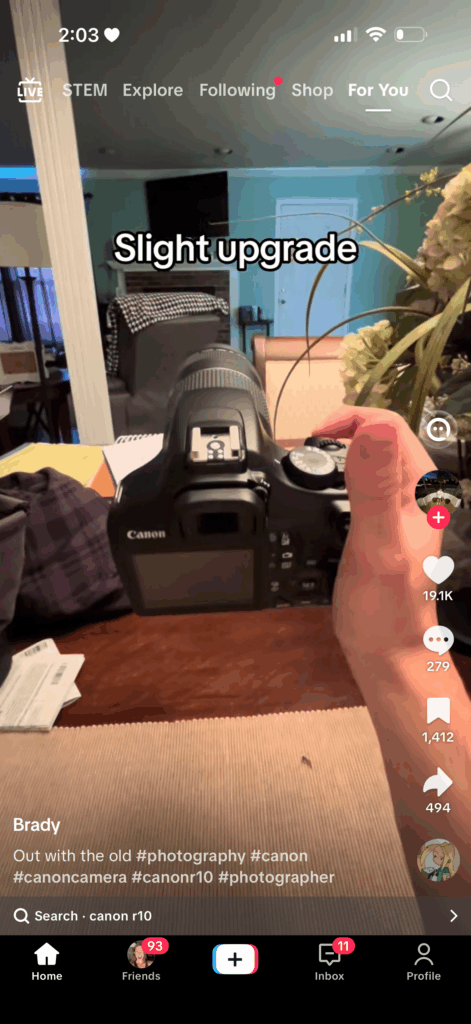
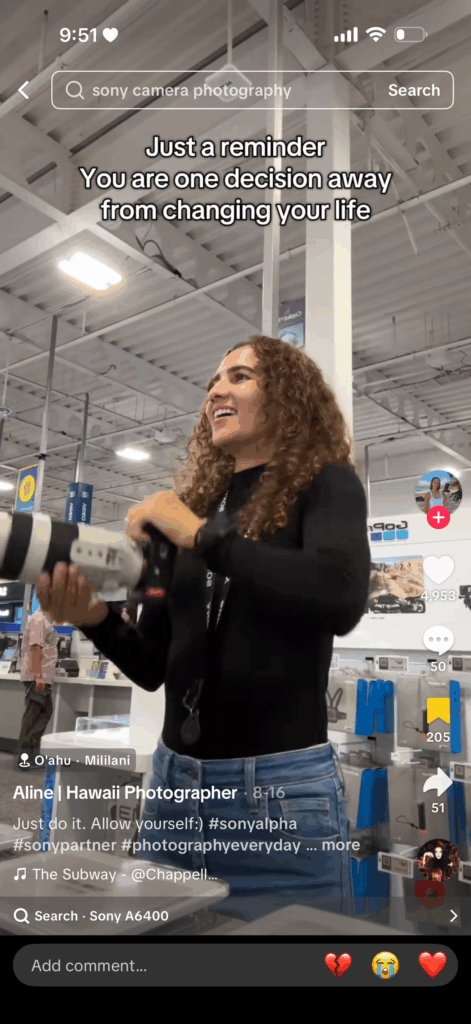
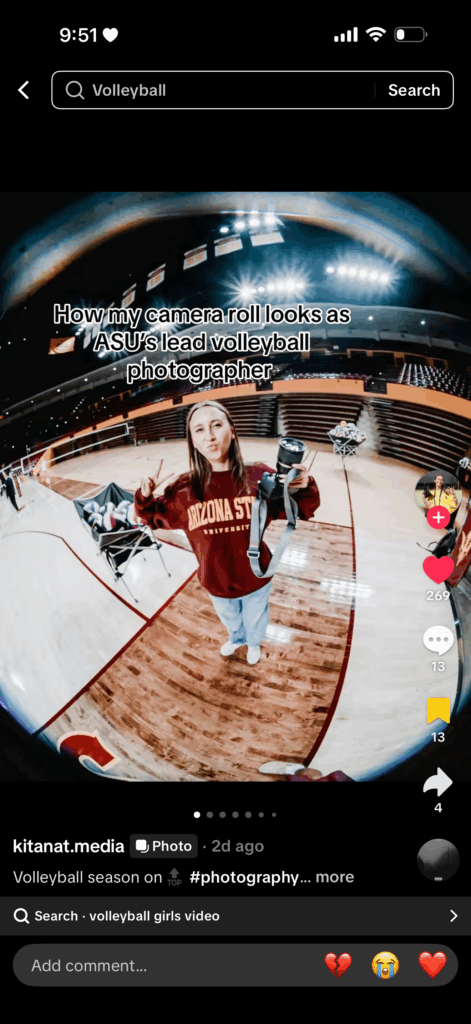
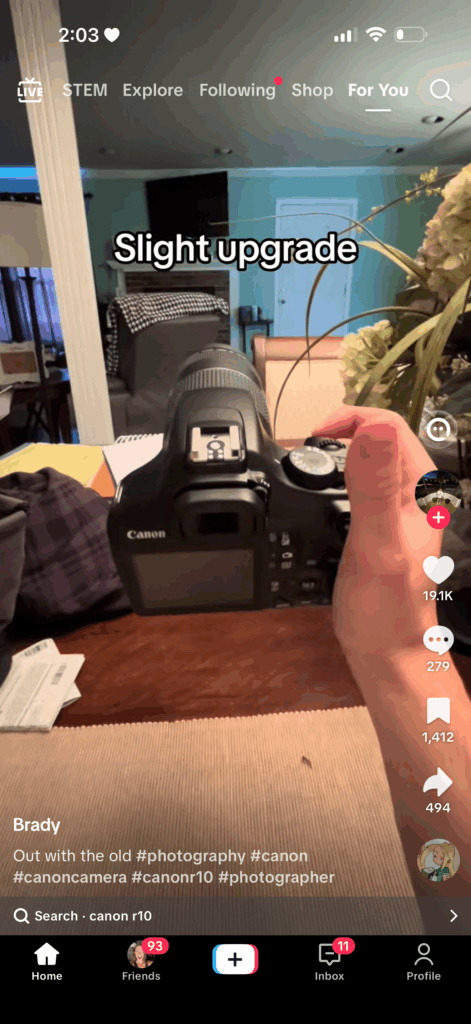
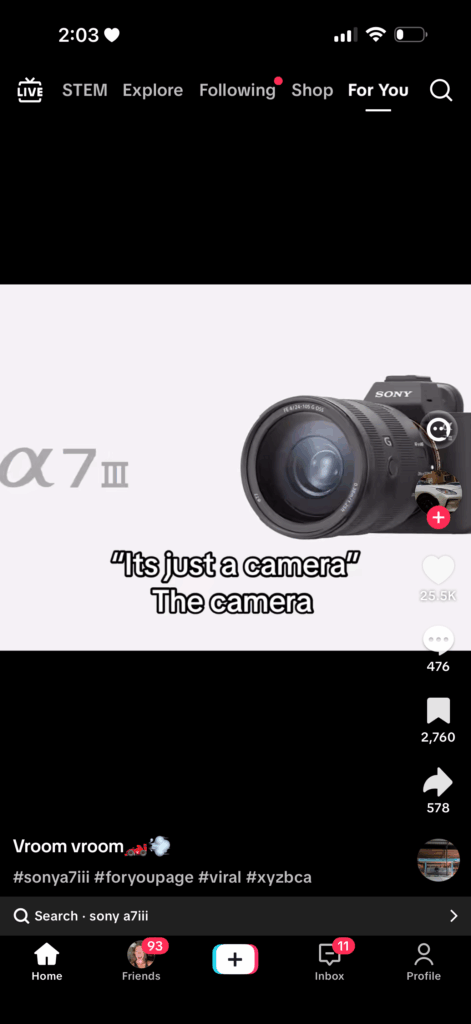
The same exact thing happened on TikTok that day. I liked and saved a couple of videos about photography, one being about sports photography, and the other showed someone taking photos at a college football game. Within seconds, my For You Page turned into a full-on photography bootcamp, and once again, I was loving it. I was getting camera gear reviews, editing tutorials, and people arguing about different Canon cameras. I have always loved sports photography and have taken a step back into this world, so seeing all of these videos was honestly perfect timing. Shout out Tik TikTok.
At first, it was kind of cool because I was like, “wow my apps really get me.” But then I realized how fast it actually happened and how completely my feed changed into what it was assuming I was enjoying. It made me think about how much control these apps actually have over what we see and believe.
Every time we like, share, comment, or even pause for a second longer on a video, the algorithm takes note and instantly changes what it is displaying to you. TikTok and Instagram both use engagement-based algorithms that learn what holds our attention, then feed us A LOT more of it. The goal isn’t really to make us smarter or more informed, but it’s to keep us scrolling (and honestly I did keep scrolling).
BUT IT WORKS SO WELL. All of these social media apps are designed to make sure that we never get bored, and I am never bored when I am scrolling away. When I liked that How I Met Your Mother video, Instagram didn’t just think, “she likes this show.” It also thought, “this kind of content keeps her here longer, which is good for us” and immediately flooded my feed with similar videos to hold my attention.
It’s the exact same with TikTok, and honestly, a little bit better. Its algorithm is especially aggressive because it uses so many signals, not just what you like or share, but how long you watch something, what sounds you interact with, even what you skip. If you watch one or two videos about photography or perchance look up photography tips, TikTok assumes you want more and more and more of it.
That might sound very harmless when it’s just about TV shows or hobbies, but this same system applies to things like news, politics, and world events. If you watch one video about a certain conspiracy theory or maybe a controversial issue, your feed can very QUICKLY fill up with more and more extreme versions of that exact same content. Suddenly, it feels like everyone is talking about it, even when that is not really true.
This constant cycle of overly personalized content can trap people inside their own little bubbles. You will start seeing the same ideas and opinions over and over, which makes them feel more believable while also making you think that everyone also has these opinions. For example, if someone starts liking videos that say a certain health myth is true, they’ll be shown more videos that support it, and almost none that challenge it or go against it in any way. That misinformation starts to feel like a straight-up fact because it’s literally all that they’re seeing.
The really scary part is that most of us don’t even realize that it’s happening. We think we’re literally just scrolling online when really, we’re being subtly guided by an algorithm that’s deciding EXACTLY what we should see next. It doesn’t mean social media is evil, because I love social media, but it does mean we need to understand how exactly it works if we want to use it wisely and not be a part of this major misinformation epidemic.
To try and really test how fast the algorithm reacts, I actually did a little experiment, kind of sparked by the sudden change into How I Met Your Mother and photography. I spent one day scrolling through my TikTok and Instagram like usual and just liking whatever I genuinely enjoyed. This changed the algorithm, and it almost reset, and there didn’t seem to be a certain niche thrown upon me. Later that day, I decided to focus only on one topic each and see how fast they picked it up.On Instagram, I went all in on How I Met Your Mother. I liked probably ten different clips in a row, sent some to my sister, and even searched the hashtag to really lock in that I like HIMYM. Within literally 10 minutes, my entire reels page was full of edits, memes, fan pages, and everything to do with the show. The only thing that broke through the HIMYM content was a single reel about honestly some inappropriate things that I will not be saying, but just know it wasn’t about HIMYM. Please enjoy the many screenshots I took. You can also see one where it includes an “interested?” button at the bottom, which I have honestly never really seen before so at least it asks sometimes if you like what you are seeing?
Then on TikTok, I switched to sports photography. I liked every sports photo edits, tutorials, and behind-the-scenes videos from photographers at different levels of games. Within MINUTES, my FYP transformed into photography content and nothing else. It was like TikTok had wiped my entire old personality and replaced it with “future sports photographer.” I was not even mad because I want to get back into that world, and I feel like I actually learned a lot about it from this little liking spree.
Here is a bunch of the tiktoks that came over my FYP, and its so interesting to see the suggested searches and how it just READ my mind and knew what I was wanting to see next.
I think the craziest part about this all was how quickly it happened. I didn’t even have to follow anyone or watch for hours because the algorithm adapted almost INSTANTLY. I truly cannot explain that it was within seconds that every single scroll was either HIMYM or photography, with literally one like of a singular video. That’s when it hit me how easily it could shape people’s opinions about MUCH more serious things, like politics or current events. I think that kind of happened around COVID and the last election, and it almost made social media miserable because there was way too much going on.
Once you can understand how the algorithms work, I think you can actually use that knowledge to protect yourself and your peace of mind when you want to sit down and mindlessly scroll.
Here are my recommendations to scroll safely!
Be aware of what exactly you are engaging with. Even watching a video all the way through tells the app you want more like it, and can mess up your entire feed. (Sometimes my feed changes because of this, and it makes scrolling so miserable)
If your feed feels repetitive or annoying, search for new topics or creators to mix it up while also clicking “not interested” because THAT BUTTON WORKS. I click it a lot.
Use your settings. Both TikTok and Instagram let you reset or manage all of your recommendations. Sometimes when mine gets a little weird, I need a reset and it is so refreshing.
DO NOT BELIEVE EVERYTHING! It’s really so basic to say, but don’t believe everything you see online, and if you choose to, maybe look it up and fact-check it if you really do not know if it is true or not.
The point of this all isn’t to delete your apps (I am never deleting TikTok) or to stop liking stuff, it’s just about being more aware when you scroll and how intense these algorithms can really be. Pay attention to what’s happening instead of mindlessly going through your feed. For me, it’s mostly funny videos and How I Met Your Mother clips, which is very harmless, but if it ever got into something deeper and more serious, the algorithm could take you down a weird rabbit hole so unbelievably fast.
It’s so crazy how much these apps actually control what we see, even when the claim that they do not. They’re not just showing us random posts that make us laugh, but they’re shaping how we see the world and take in all kinds of content. What we think is important, what we care about, what we even believe sometimes literally all comes from what’s showing up on our screens on the daily.
And for my generation, social media is literally where we learn everything. News, trends, opinions, whatever you can possibly think of. I honestly use TikTok as more of a Doogle than actualy Google. So actually understanding how it works really matters and can effect how smartly we scroll.
So next time your feed starts getting a little too specific, stop for a sec and think about it. Why are you seeing this? What did you like or save that might have made it show up? Once you start noticing these patterns and how social media really works, it’s WAY easier not to get caught up in them.
Okay! After reading the explanation for the final blog post, I am so excited to start and finish this course off strong!!!! Please enjoy my outline and what I plan to do for the MCO 427 final project.
Final Project Outline – “We Got This!” Blog Assignment
The topic that I am covering: I plan to focus my blog post on how social media algorithms manipulate our news feeds and influence what we believe. Specifically, I want to explain how platforms like TikTok and Instagram prioritize content that is sensational, emotional, or highly engaging, which can EASILY lead to misinformation spreading very quickly. (I literally saw a post yesterday saying that Russell Wilson retired and I fell for it instantly and told my dad, then having to go back to fact check and found out that I got tricked by a parody account) As part of my project, I will scroll my own feeds (TikTok and Instagram’s Explore pages) and watch how the content changes based on what I like, search for, or interact with. I think this will give a real and very relatable example of how algorithms actively shape what users see, and how quickly and how often they are changing through one sitting of scrolling.
Why this topic is important: This topic is important because most people get news and information through social media without realizing how much it is curated by algorithms. These systems are designed to keep users engaged, often by showing content that triggers strong emotions rather than content that is accurate or balanced. By understanding how algorithms work, people can become more aware of why certain posts appear in their feeds, recognize potential misinformation, and make smarter choices about the content they consume.
Target audience: I think my target audience is college students and young adults (ages 18–26) who use social media every day for news, entertainment, and connecting with friends (aka me). This group is VERY tech-savvy and spends significant time on TikTok and Instagram, but they may not truly understand the subtle ways their feeds are influenced and what misinformation they may be taking in. They are also likely to share content without even thinking about its accuracy, so teaching them to notice how algorithms shape their feeds could help them be more informed and responsible media consumers.
Method and medium: I chose to create a 900-word blog post to explain how the algorithms shape social media feeds and influence what people believe. I really enjoy writing (when its like a blog) and feel like I can explain myself better in this format, so doing a blog will let me fully share my ideas and observations about this topic. I’m excited to include links, screenshots, and photos to make the content more engaging and easy to understand espeically when its from my own phone and social media account. The post will use examples from my own TikTok and Instagram feeds to show how the content changes based on what I like, search for, or interact with, making the concept super concrete and relatable for readers who may be addicted to their phones like I am.
Why I think this method/medium will be effective: I think a blog post is perfect for this audience because it allows for a slightly more in-depth explanation, more than what a short video may provide. Readers can scroll at their own pace, refer back to examples and links I give, and engage with the visuals I plan to include. Combining personal examples, research, and tips, the blog will make the abstract idea of algorithmic influence relatable and honestly easy for readers to read. I think I type very much like a 25 year old, so they wont have a hard time trying to understand what I am saying. Sharing many screenshots, links, and photos will help any readers actually see the concepts in action and give them practical ways to think about how they truly use social media.
Misinformation is everywhere online, from viral conspiracy theories to misleading political content, to the point where you could see something and have NO clue it is completely made up. It spreads rapidly, influences the public opinion on certain matters, and can even cause real-world harm to people or businesses. As two of the biggest platforms on social media, Instagram and Twitter (now called X, but I refuse, and it will always be Twitter to me) have taken different approaches to dealing with all the false information on their platforms in order to potentially halt the misinformation spread. I am going to break down what each social media platform is currently doing to fight the misinformation, where they may be falling short, and what I think could possibly make their strategies even better.
Instagram
Instagram, owned by Meta, is all about visual content and creating the perfect aesthetic throughout your feed, so I think it’s really easy for misinformation and potentially edited pictures to blend in. Posts that look aesthetic or share “facts” on a cute infographic might go viral fast, even if they’re totally fake. In 2025, Instagram is still trying to stay on top of this, using fact-checking tools, labels, and new warnings for AI-generated content.
One big thing Instagram uses is third-party fact-checking with their new partnership with legit organizations like Reuters and the Associated Press. If a post gets flagged, it’s reviewed, and if it’s false, Instagram either puts a warning label on it or takes it down completely. These warning labels explain why the post is misleading and usually link to trusted sources where you can find true information regarding the topic. Also, flagged posts don’t get pushed out by the algorithm as much, so fewer people end up seeing them.
Instagram also pushes resource hubs during big events like elections or public health crises. These show up when you search for certain topics or sometimes even at the top of your feed. I remember this happening a lot during COVID and the 2024 election; they’d direct people to accurate info from real sources.
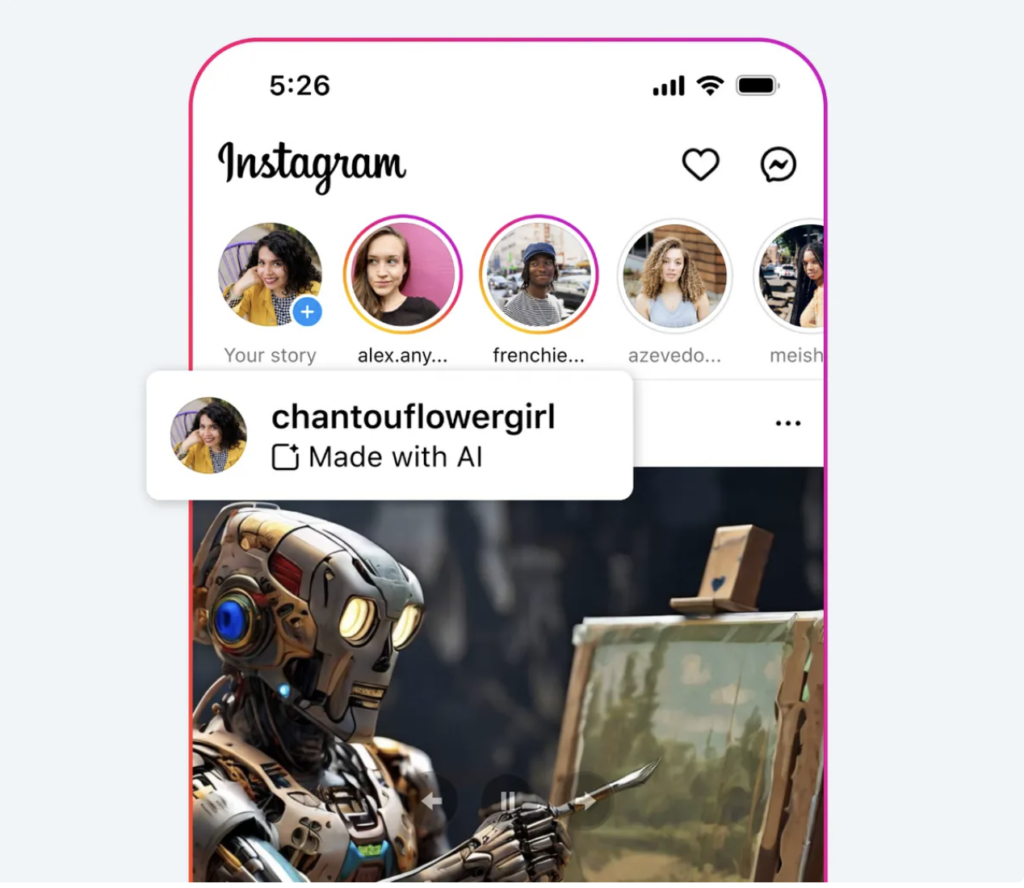
One of the newer updates from 2024 is that Instagram now labels AI-generated content. With how good deepfakes and AI images are getting, this is actually super important. So if a post was made using AI, Instagram will try to include a note letting you know. It doesn’t necessarily say the content is false, but it gives you a heads-up that what you’re seeing might not be real.
Here is what the AI label would look like on photos.
From what I’ve seen, sometimes these labels seem random, like I’ve noticed them on normal photos of my friends that definitely weren’t AI, so clearly the system isn’t perfect yet. Also, I almost never see these labels used on any Reels. Probably because Reels are short, go viral quickly, and might be a little bit harder for Instagram to monitor or notify us of AI use without stopping the entire video we are watching. Not to mention, DMs are a huge weak spot where misinformation spreads with no moderation at all, but there still needs to be that sense of privacy from the app seeing everything you do.
If Instagram really wants to improve, they need to speed up the review process of things they suspect as misinformation. Misinformation spreads way too fast to wait days for fact-checking when they are clearly already mislabeling things as AI. I think they also need to moderate stories and DMs better, while still allowing privacy. New accounts are constantly being made and posting these hints of misinformation, so a better way of tracking that may increasingly help. And honestly, a little more user education wouldn’t hurt, like short Reels or tips showing people how to tell what’s real and what’s fake, especially with all this AI stuff. I guess it does depends what your algorithm is like, because I just see silly videos, but there could be humans out there who are only taking in misinformation being spread through Instagram.
Twitter (aka “X”)
Ever since Elon Musk bought Twitter in 2022, the platform has changed a LOT and how it deals with misinformation is one of the biggest shifts. Before, Twitter worked closely with fact-checkers and had stricter rules. Now, most of that’s been dropped in favor of something called Community Notes.
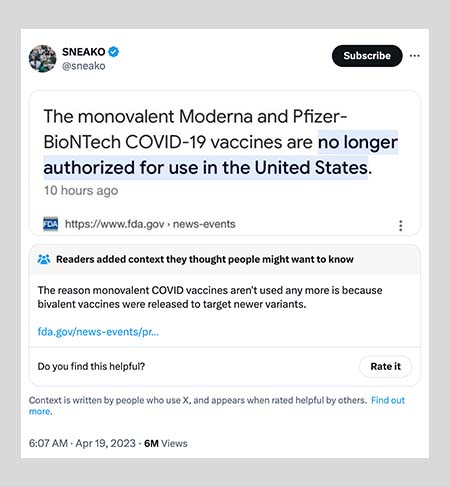
Community Notes let users add context to posts. So if someone tweets something misleading, verified contributors can write a note under it that explains what’s wrong. These notes include links, sources, and facts. But here’s the catch: the note only shows up after people from different backgrounds vote it as helpful. So if it is constantly voted as not helpful, it will not be shown to others.
Here is an example of a community note.
In theory, it’s a really cool idea. It lets the community help fact-check in a more open way. I’ve seen it work well, like when a viral tweet falsely said mail-in voting was canceled in some states, and a Community Note popped up within hours with links to the actual info. That is super helpful and shows how beneficial this new system can be when used correctly. But the system definitely has flaws. If a post isn’t getting enough attention, it might not get fact-checked at all. And even when it does, the community is not written by the COMMUNITY, so it also could be more misinformation. Twitter cut ties with its professional fact-checkers, and there’s not as much expert oversight anymore, which is kind of scary.
From what I’ve seen using Twitter daily, Community Notes can be really useful. They’re not always fast, and the bigger or more political the account, the slower the response seems to be. I have seen a few community notes that also seem to just be kicking the creator and almost an attack on their original tweet, which I admit can be funny and has made me laugh.
To fix this, Twitter should speed up how notes appear, especially on tweets with high engagement that are being seen by hundreds of millions of people. Even a temporary warning until the note is approved would help stop false info from spreading too far. And honestly, bringing back some professional fact-checkers wouldn’t hurt. For example, during election season, maybe have these professional fact-checkers do their thing so people’s views aren’t swayed by wrong information. The community system is cool, but it needs backup for complicated topics that the average person might not know the exact answer to.
Instagram and Twitter both handle misinformation in totally different ways. Instagram uses a more professional, structured system with fact-checkers and labels meant to warn its viewers. Twitter is a little more open-source, letting the community step in and take charge. Instagram feels more trustworthy, but it struggles to keep up with fast content like Reels and DMs, and constantly mislabels. Twitter is more democratic, but it can be inconsistent and too slow to react. As AI makes fake content look even more real, these platforms need to step it up. Speed, transparency, and education are key. It’s not just about taking fake stuff down, but it’s about helping us all understand what we’re seeing and make smarter choices online.
Misinformation is quite literally EVERYWHERE online, and it can be hard to know what’s true and what’s not in this day of scrolling. I tried out two tools that are designed to help people understand misinformation better, RumorGuard and the game Breaking Harmony Square, so lets talk about them!
RumorGuard is a site from the News Literacy Project that basically fact-checks viral claims and breaks them down step by step to let you know the truth. How I have never heard of this website, I have no idea, but I truly think it is one of the coolest things I have found from an ASU course so far. Each rumor is tested using five things: Source, Evidence, Context, Reasoning, and Authenticity. You just click on any rumor and it walks you through each factor, showing where the claim falls apart or where it holds up. For example, here is the most recent rumor on the home screen about the state of Texas allegedly banning Mountain Dew.
(My picture would never upload and I didn’t know what to do so here is a link lol)
What it really teaches is that you shouldn’t just accept something immediately when you see it online, especially from a random tweet or instagram post. This website gives you a checklist you can store in the back of your brain and really apply anywhere online as you scroll your heart out. I like that it’s really simple and makes fact-checking feel doable for anyone, not just journalists or professionals. I think the only weakness would be that you have to actually practice the five steps on your own for it to stick because just reading them isn’t enough. RumorGuard is effective because it’s very clear, up-to-date, and actually shows you the process of how things are proven right or wrong instead of just saying “true” or “false.” It’s a really good tool to learn from and then apply to your own social media feeds, because I know I will be banking it and using it for the next time I scroll.
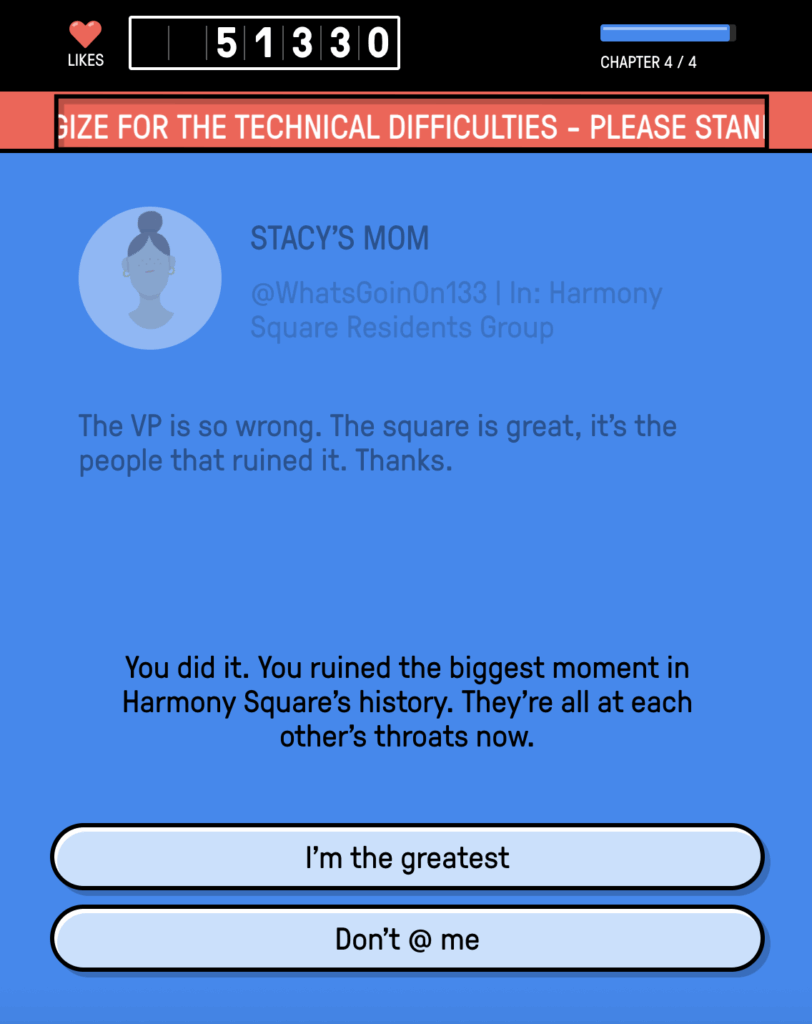
Honestly, I had a lot of fun playing every single one of these games and I am not entirely sure what that says about me. The one I ended up choosing to write about was Breaking Harmony Square as it ended up being my favorite of the three and one which I feel like I actually learned something from. You become sort of a troll online and set out to destroy other’s reputations while also learning what catches eyes and can get likes online when it comes to rumors or click worthy topics. In this age of digital media and technology, learning the trends and what may give you views has become so important for not only those spreading news and the truth, but those attempting to spread misinformation. The game showed you how misinformation was spread online, and how trolls ultimately have a life goal of stirring up drama, spreading fake news, and attempting to divide the internet. It allowed me to step into the shoes of a troller to see how twisting facts and creating false narratives can turn the internet against you, or build up a fan base and bring your false rumors to life.
I think it’s pretty effective in teaching about misinformation because it’s very interactive and makes you realize how easy it is to cause division if people don’t stop and question what they see online. It also shows that misinformation isn’t just about fake facts but also it’s about how content is framed and shared to manipulate emotions of those online. The only downside is that you only see it from the perspective of those spreading all of the misinformation, so you might have to take that extra step of reflecting afterward to really understand how to apply the lesson in real life from the other side of the internet and those who might be the ones receiving all the false information.
Step 1: Introduction: Why is this claim worth evaluating?
I always come across claims on social media saying that “drinking lemon water every morning can cure all your health problems” or something along those lines. At first glance, I am pretty convinced, and it always seems like a really appealing piece of advice, so much to a point where I might have a glass of lemon water the very next morning. The lack of any real scientific explanation or possibly a doctor’s reference does make me a little skeptical and then I start to question if it would really be worth it. As someone who has recently been breaking down my health to become the best version I can be, I knew that a claim like this deserved a closer look to determine if there was any truth behind it or if it was just another piece of misleading advice that I might fall into the trap of.
Step 2: My Initial Skepticism
What immediately raised my skepticism about the claim were a few red flags that I always think of when I come across claims like these on social media. There was no citations or credible source attached to all of the specific posts I have seen on TikTok, and they are rather “health influencers” talking to the camera and claiming they know how to fix everything. The claim was presented kind of just as a general statement followed by no supporting research or expert opinion, which I need to remember is OFTEN a sign of misinformation. The language used is also always extremely exaggerated. “Cure all your health problems” is a REALLY bold statement that I think is often used for clicks to ensure that this video catches the eyes of anyone who is hoping for some kind of cure. It also seems a little unlikely that something as simple as lemon water could provide such broad health benefits, but I also gave it the benefit of the doubt because the human body is truly so incredible.
Step 3: Verification – Begin with the Source
To investigate further, I began by checking the original source of this claim. I could not find the specific TikTok I found, but I did find many others who are claiming the same benefits of lemon water. Below are some of the videos that came up first when I looked up ‘lemon water curing health problems’ into my search bar on TikTok.
The TikToks I selected all come from various accounts, all depicting a different niche for their audience. The first comes from Drew Canole, a creator and CEO of a green juice company, who seems to be on the set of a podcast or some really high-end video production. Everything he seems to say sounds very medical and correct, but we have no idea where he got this information from. I was unable to find any information about him on his account that could lead to this information being credible or from a medical standpoint. The second video comes from the username @TruAgeHealth, who appears to be a health coach, but his follower count is low, and there is not much else to prove that he is a true health coach. The last video comes from a woman by the name of Lynette, who claims she is 41 years old and looks good because she drinks this lemon water concoction every morning. She includes a short list of the benefits, but again, she seems like a health fitness niche content creator who made this for views.
Step 4: Lateral Reading – Search for Other Perspectives
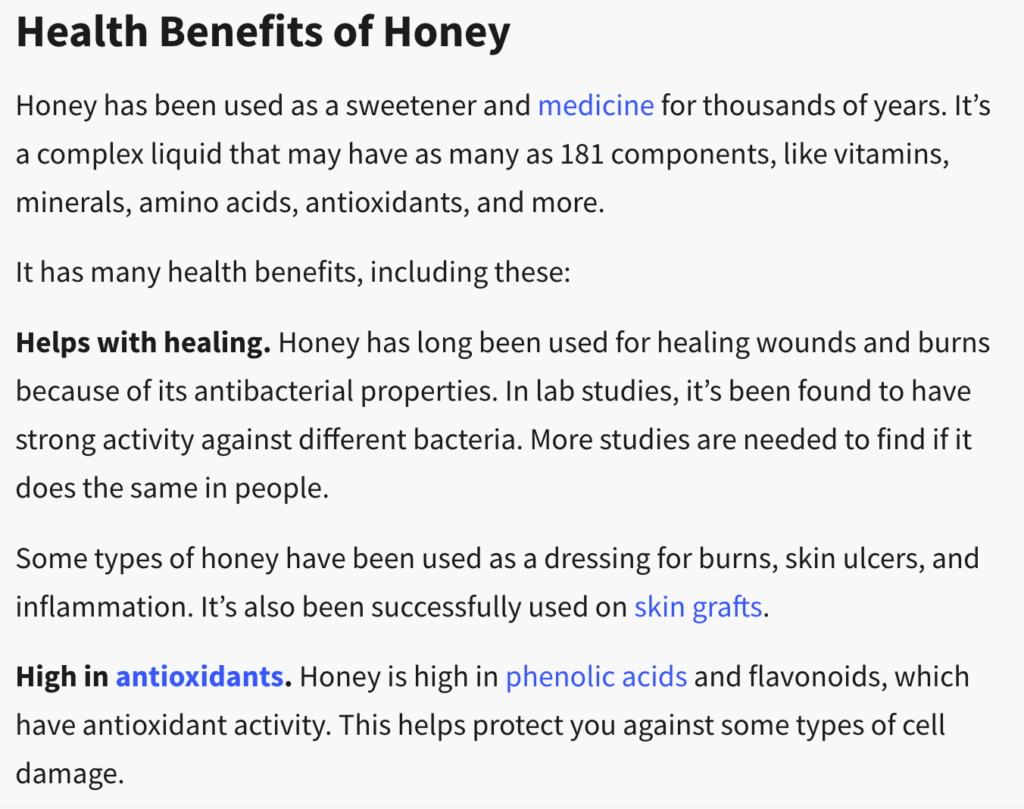
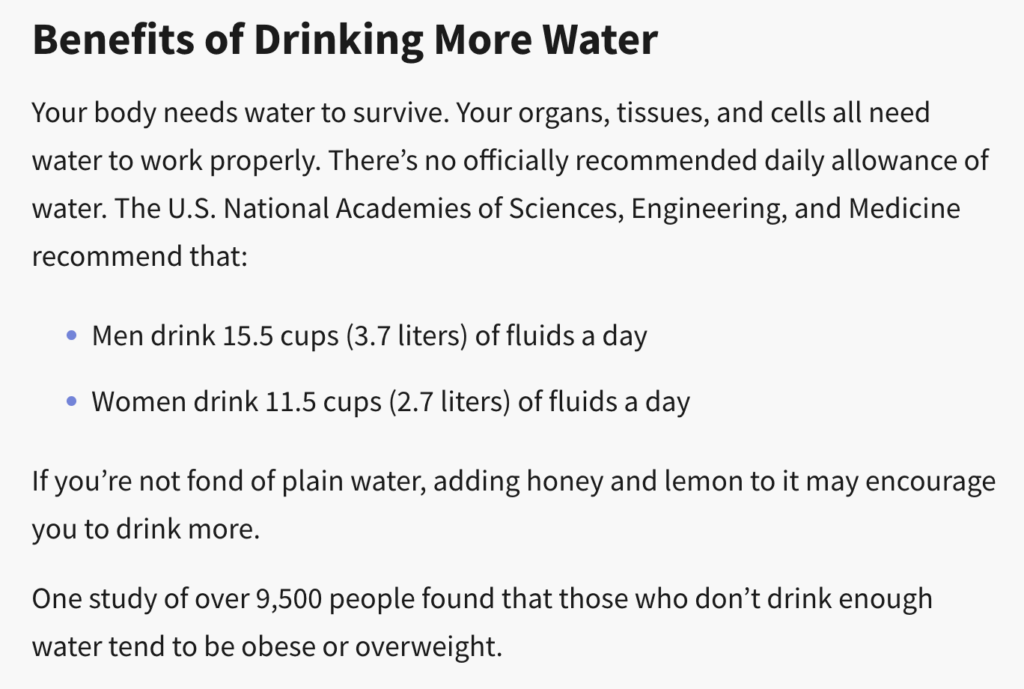
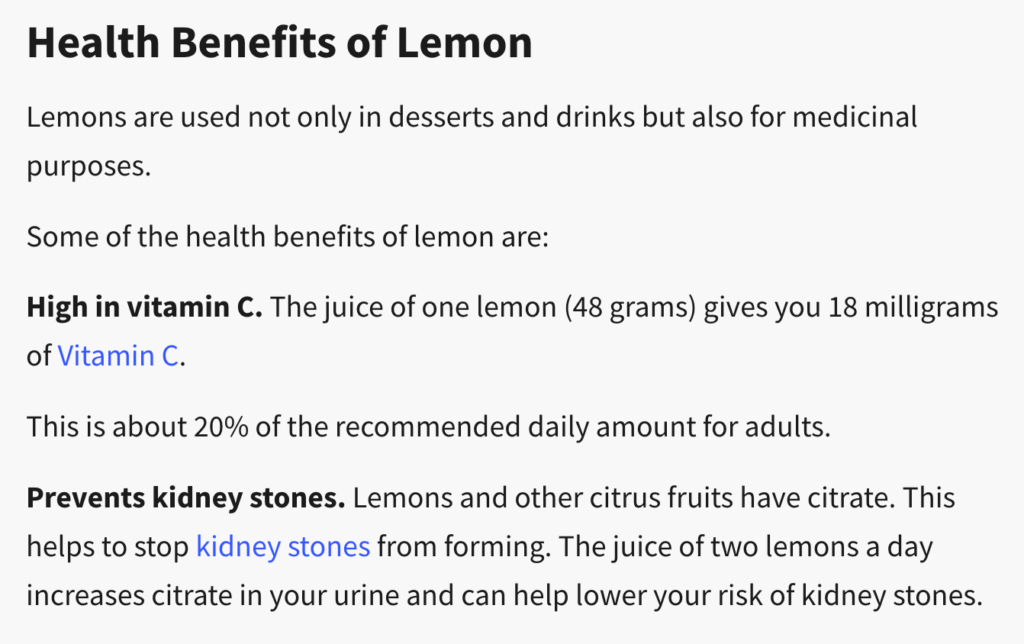
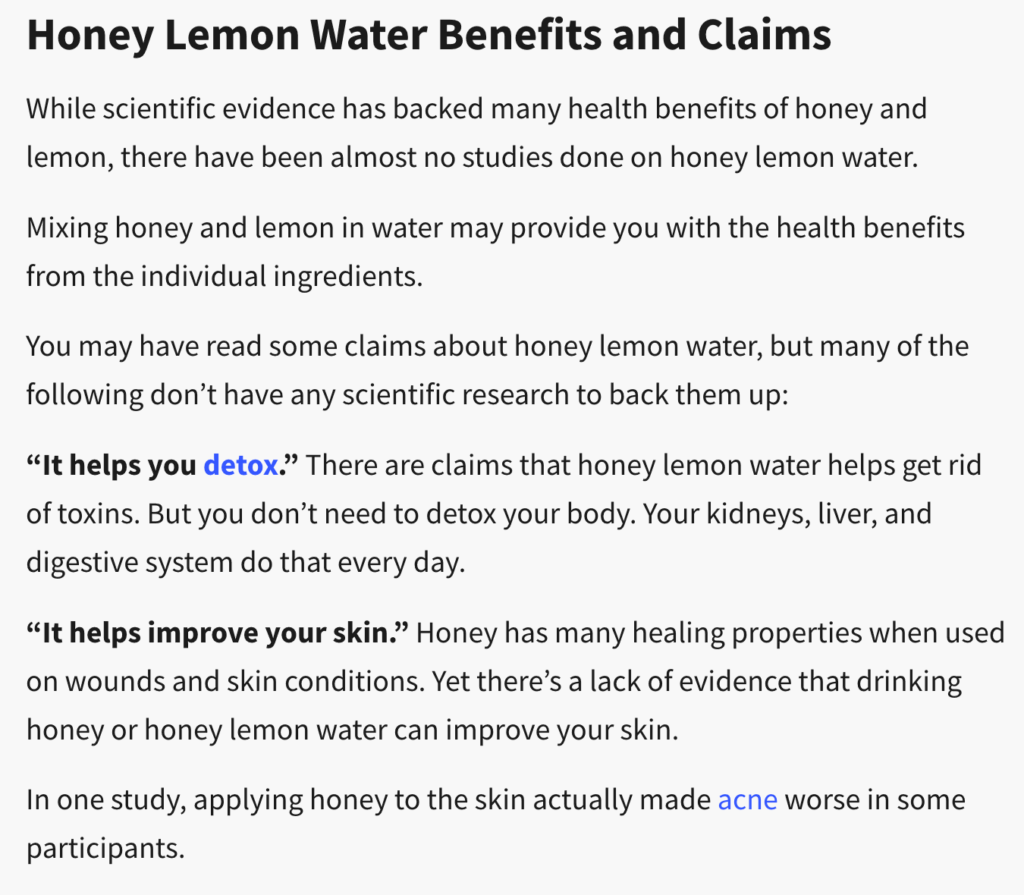
I used lateral reading to cross-check the information given in hopes of finding any official sources that support this claim of lemon water and its health benefits. I initially just looked up lemon water benefits, and was met with a Vogue article explaining them. I honestly was not sure how to take this one because it is Vogue, but I also think they are most likely researching and providing information that is 100% true. Their information came from a registered dietitian and nutritionist, and she explained that lemon water can hydrate the body and strengthen your immune system, amongst other things. They also included the downsides of a lot of lemon water, including its high PH and ability to alter that number throughout different parts of the body. I also searched for more reputable sources and expert opinions on the topic of lemon water and its health benefits. I came across an article from a trusted health website, WebMD, that explained the benefits of honey lemon water. It explained the separate benefits of honey, lemon, and water, and the benefits of all three combined, but claimed no research has officially been done, and it may be different for each person. That part really stood out to me because lemon water could have changed someone’s life, but would probably not have the same effect on me if I started gulping some down every morning.
After doing some digging online, I think I have found that lemon water does have some benefits, like helping with hydration, giving you a boost of vitamin C, and possibly supporting digestion. But the big claim I keep seeing about it being a “cure-all for health problems” is definitely blown out of proportion. While it is good for you, it’s not the miracle cure for any issue like people online often make it seem. What I also noticed is that this claim of lemon water pops up everywhere on social media, at least for me. It’s like every other post is talking about how lemon water is a must-have for your health. It could be my algorithm picking up on me watching this kind of video, but so many creators are constantly posting videos with the claim that lemon water is changing their lives. Looking at more official sources, while lemon water can be a healthy addition to your routine, it’s not as magical as some make it sound. It’s just a simple, healthy habit that maybe could change your life, but not in the way it’s spread across social media.
Step 6: My Final Thoughts
After looking into the claim I was seeing nonstop, I found that the idea of lemon water curing all health problems is definitely an exaggeration. It’s a healthy habit to include in your daily routine, but it’s not going to solve all your health issues after one sip. The crazy claim that it can “cure all health problems” just doesn’t hold up when you look at reliable sources that come from medical professionals and research. This entire process reminded me how easy it is to get caught up in claims that sound too good to be true, especially when they’re shared all over social media, because I know I come across something like this at least once a day. It’s important to take a step back and really think about the information you come across, and especially who this information is coming from. Taking the time to quickly verify things, check sources, and avoid jumping to conclusions can help any of us from falling for the spread of misinformation online. If everyone took a few extra seconds to do this, I think we would see a lot less fake information spread around social media platforms. So next time you see something that sounds a little too good to be true, make sure to dig a bit deeper before going all in.
Before this assignment, I was unsure what editing Wikipedia would look like, and honestly, how easy it would be. I use it all the time for quick info, like probably everyone does, but I never really thought about how the information gets there or who might be putting it all together. When I first read the instructions for this assignment, I had NO IDEA what article I would even attempt to edit. I didn’t have a single idea in mind, and honestly, the idea of contributing to something so public and structured felt a little intimidating.
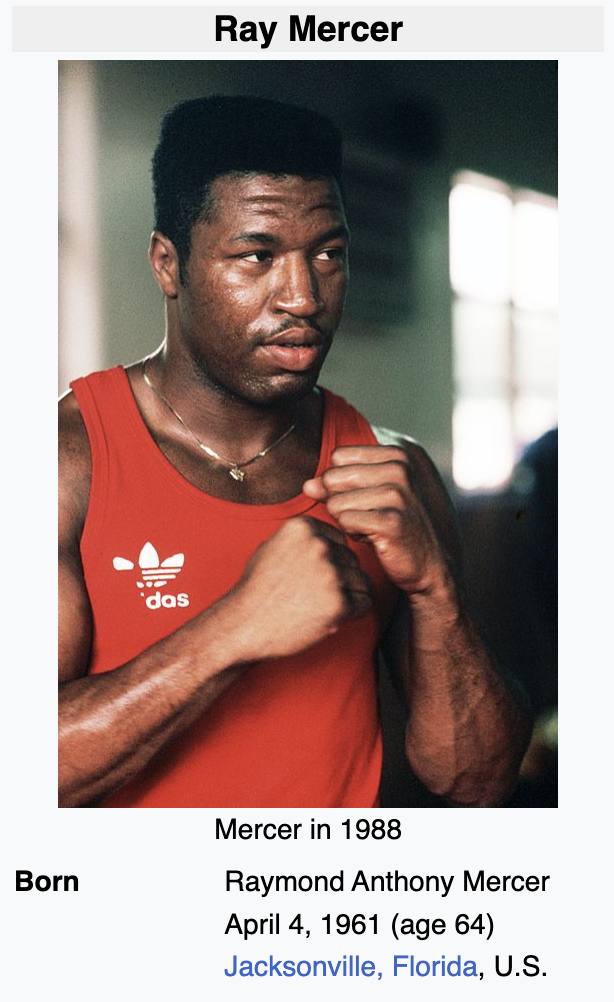
I took Wikipedia’s suggestion and looked at a draft article about a professional boxer named Ray Mercer. It caught my attention because the name sounded kind of familiar, and I love learning about athletes. It was a biography with a decent amount of details, but it said it needed better structure and tone. I genuinely felt so uncomfortable changing or adding any specific facts, but I found one part about his early life and military background that felt a little awkward and worded weird, and decided to revise that.
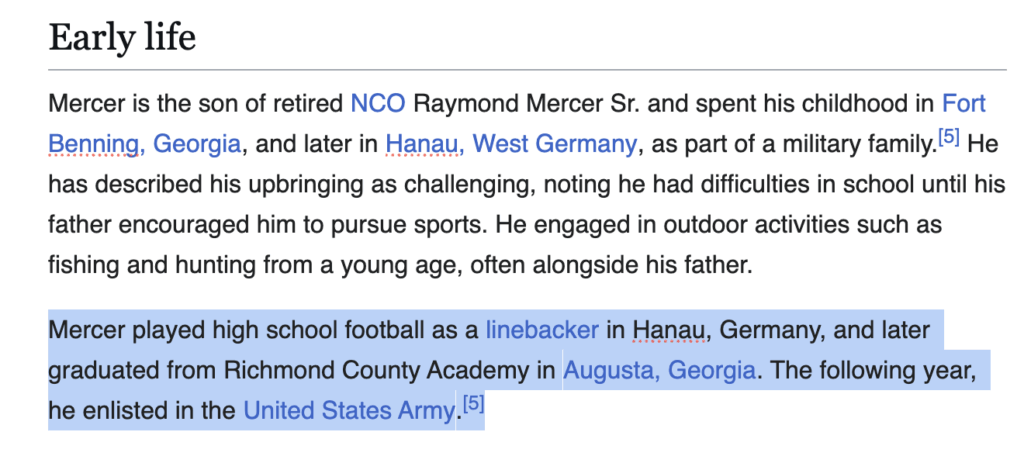
The original sentence, under the early life section, said:
“Mercer played linebacker during high school in Hanau but did not intend to attend college. After graduating from Richmond County Academy in Augusta, Georgia, he enlisted in the United States Army the following year.”
I rewrote it to make it flow a little better and sound more official and almost encyclopedic.
“Mercer played high school football as a linebacker in Hanau, Germany, and later graduated from Richmond County Academy in Augusta, Georgia. The following year, he enlisted in the United States Army.”
It’s a really small change (and I hope a good enough one for this assignment because I am stressed), but I realized that even these small edits help make the article more readable and professional for viewers. It also helped me understand how important tone is on Wikipedia because everything needs to sound neutral and factual, not super casual or opinionated in any way.
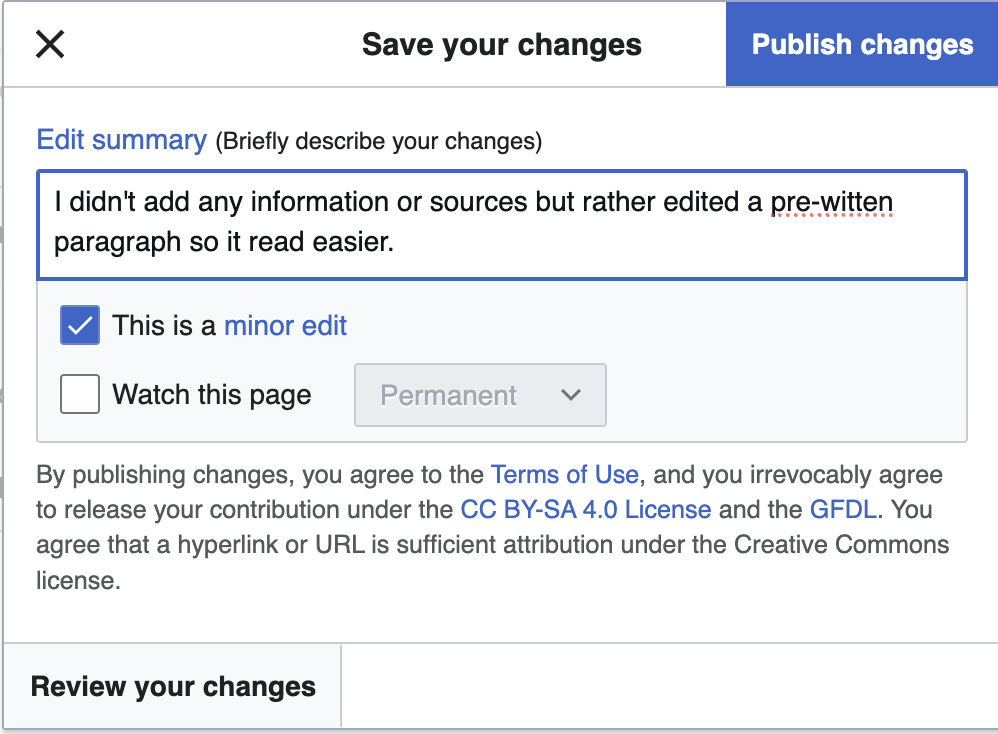
Before making this edit, I went to the Talk page and was honestly really confused about how to use this page. I typed and explained what I planned to change and why, and I never received a reply (I honestly have no idea if my comment was even actually posted on the Talk page). After waiting a bit because I was truly confused, I just went ahead and made the edit, knowing I wasn’t actually changing any information. It was live instantly, which was kind of cool, but also made me nervous because it’s just like that? Immediately done? All I had to do was submit a comment and there it was.
What surprised me most about this whole entire experience is how accessible Wikipedia editing actually is. I kind of assumed it was something only “experts” or super techy people could do. But as long as you follow the rules, stay neutral, use reliable sources, and make thoughtful edits, really anyone can contribute and be a part of the Wikipedia team.
This DEFINITELY changed my view of Wikipedia. I honestly used to think of it as this fixed, massive site created by professionals, but edited by strangers on the internet. Now I see it more as an evolving, collaborative space that is full of real people. Those real people, not just scholars or editors, are behind every sentence and do this with a passion. And that just means that I can be one of those people, too.